
[For a Physical and Chemical Equipment Trading Company] Simple Anechoic Box TYPE-1 + OP with Casters (with observation window and sample table)
AEB
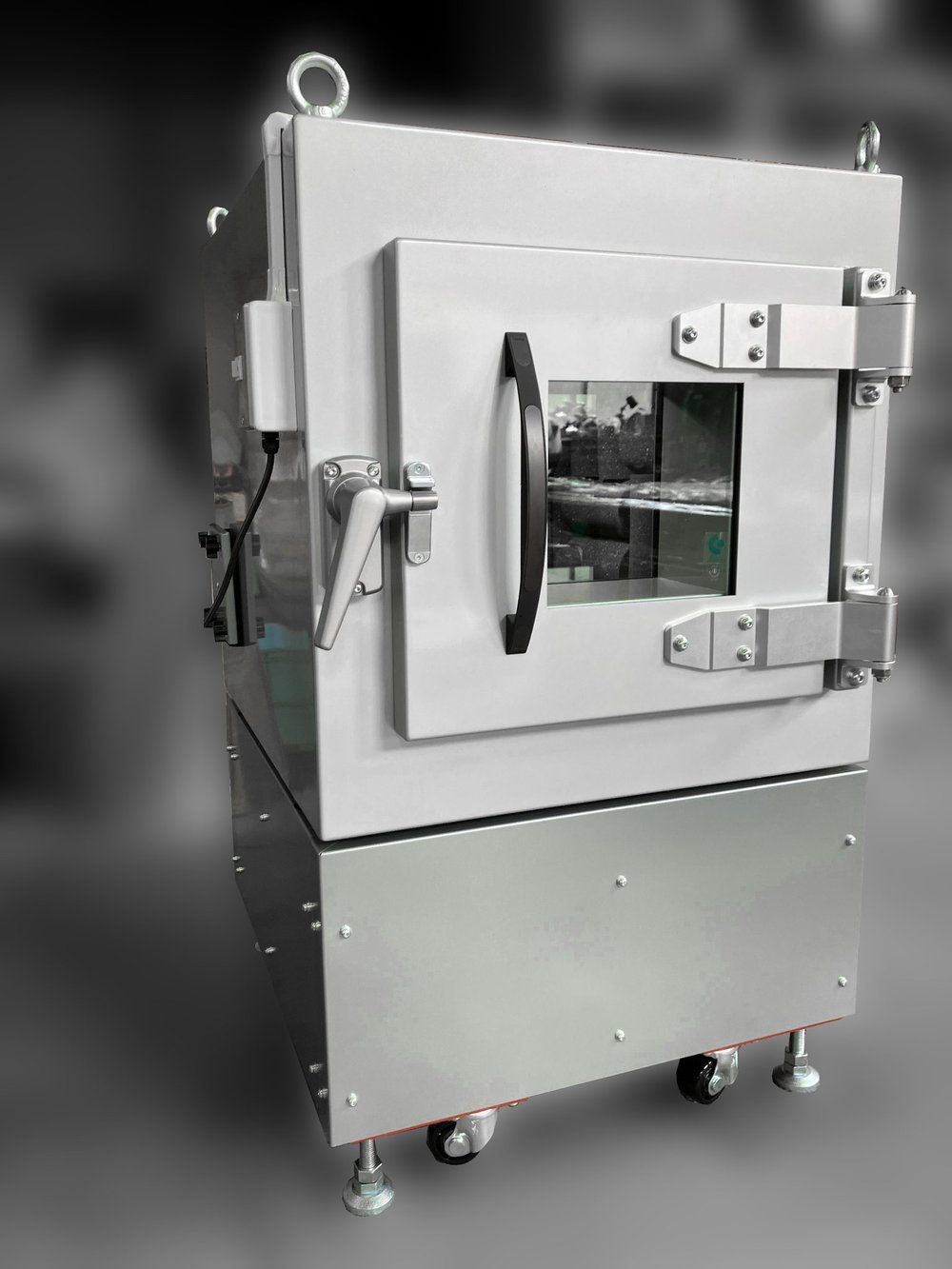
We delivered a simple anechoic box TYPE-1 + OP to a physical and chemical equipment trading company.
This equipment is an anechoic box designed to measure operational noise generated by small products or components in an environment that suppresses ambient noise and internal reflections.
The main unit features a compact design with outer dimensions of W700 x D750 x H700 mm, and all six inner surfaces are sound-absorbed. Mounted on a dedicated base with casters, it can be moved to different measurement locations within the laboratory. Options include a double-glazed observation window, a sample table, LED lighting, and microphone hooks.
Equipment Summary
| Item | Specification |
|---|---|
| Delivery Destination | Physical and Chemical Equipment Trading Company |
| Equipment Name | Simple Anechoic Box TYPE-1 + OP |
| Type | Anechoic box with 6 internal surfaces treated for sound absorption |
| Main Application | Operating noise measurement of small products and components |
| Installation Format | Indoor installation, mounted on dedicated base with casters (movable) |
External Dimensions
| Item | Dimensions |
|---|---|
| Main Body Outer Dimensions | Approx. W700 × D750 × H700 mm |
| Inner Dimensions | Approx. W400 × D450 × H400 mm |
| Total Height (including dedicated base) | Approx. 1,160 mm |
| Observation Window | 230 × 230 mm (Double glass) |
By mounting it on the dedicated base, the box opening is brought to a height that allows comfortable work while standing. Loading/unloading samples and positioning microphones can be performed without stooping over.
Box Structure
Exterior
- Multi-layer sound isolation METAL layer
- Specified color painting
Interior
- AST sound-absorbing material + rear sound-absorbing layer
The multi-layered metal structure suppresses external noise intrusion, while the internal sound-absorbing material reduces reflection of sound emitted from the test subject.
The sound-absorbing materials are cylindrical shapes combined with alternating orientations per surface, completely covering all 6 internal surfaces without gaps.
Soundproof Door and Observation Window
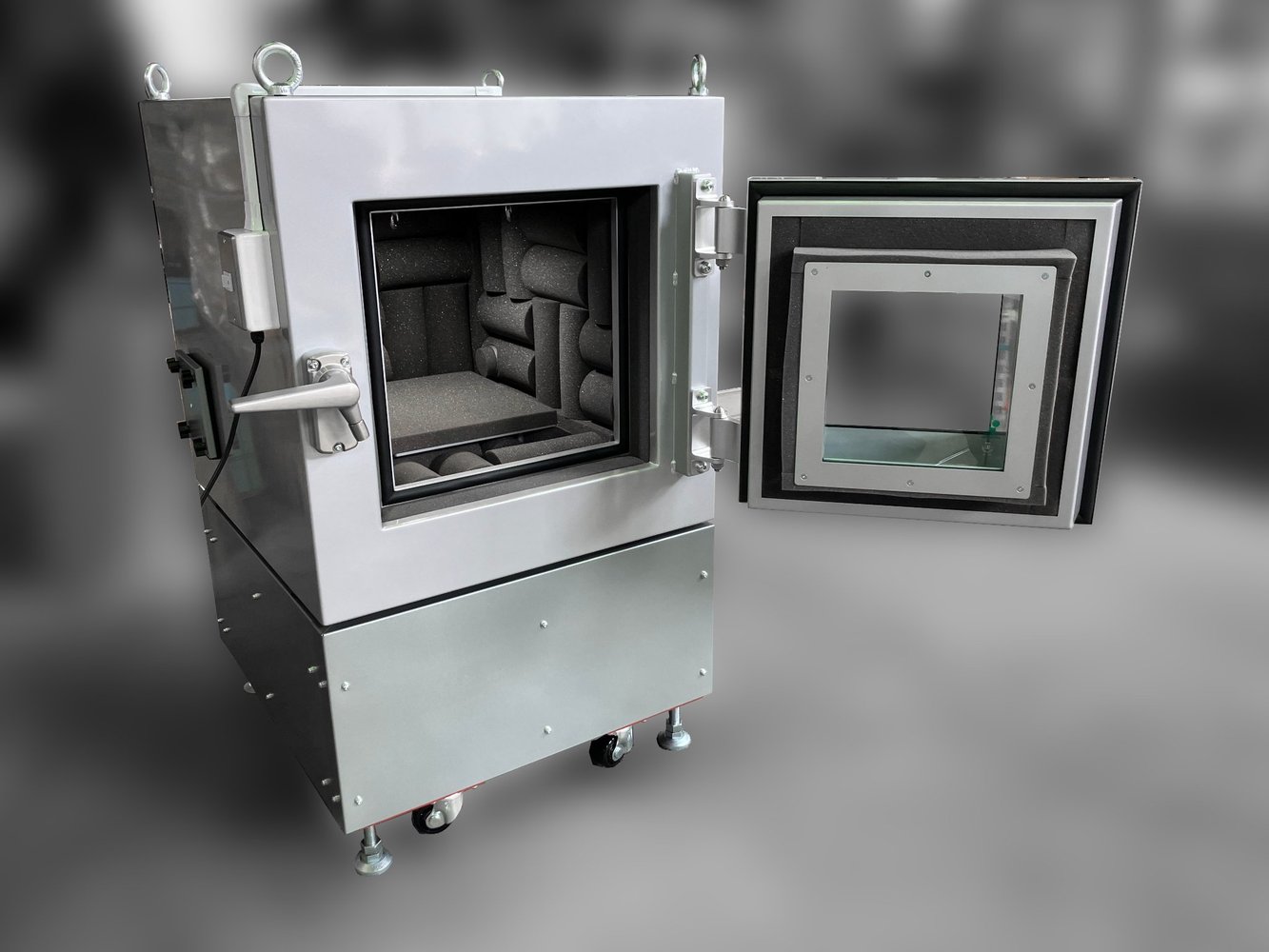
The front door also features a sound-absorbing layer on the inside. When closed, the door surface matches the sound absorption conditions of the other sides.
The door is supported by two hinges and tightened with airtight handles to ensure tight gasket sealing. The perimeter of the opening has a double gasket structure to minimize sound leakage through gaps when closed.
The door is fitted with a 230×230 mm double-glazed observation window. You can check the status of the sample during measurement without opening the door.
Internal Structure
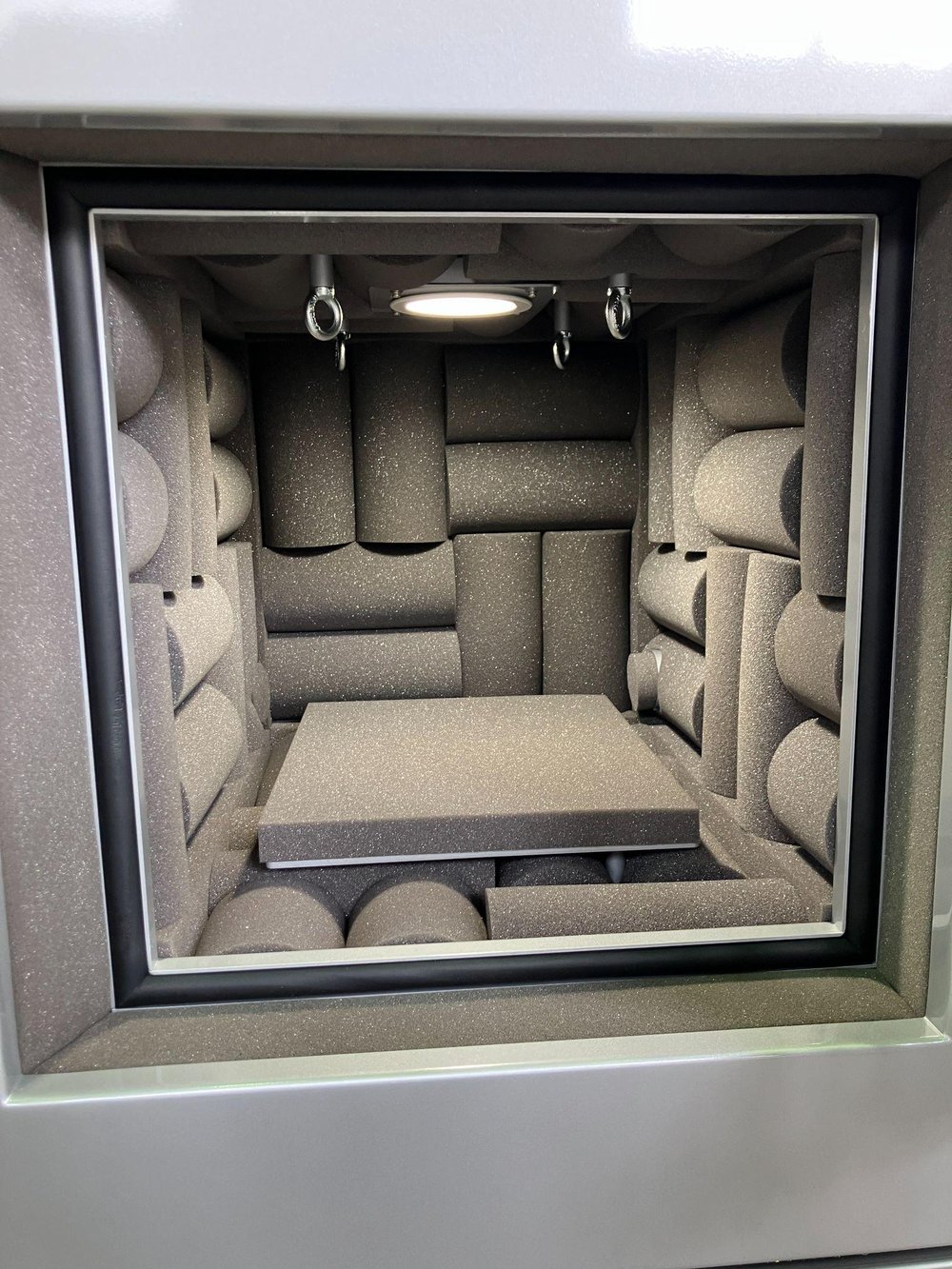
- Sample Table: Steel t4.5 (includes sound-absorbing mat)
- Microphone Hooks: Eyebolts M8 × 4 locations
- Lighting: LED Downlight
The sample is placed on a table suspended in the center of the box. A urethane sound-absorbing mat is placed on top of the table to suppress reflection from the table surface as well.
Microphones can be hung from the eyebolts on the ceiling. With four locations available, they can be used according to the measurement positions and number of microphones.
Movement and Installation
- Dedicated base with swivel casters
- Heavy-duty adjusters
- Vibration isolation pads (4-point support)
- Installation eyebolts M16 × 4 locations (removable)
Move using the casters on the dedicated base, then lower the adjusters to fix in place at the measurement site. The main box body and base are supported at four points with vibration isolation pads to prevent floor vibrations from interfering with measurements.
Eyebolts for transport can be attached to the top surface. They can be removed once lifting and transport are completed.
Main Accessory Equipment
- Observation window 230×230 mm (Double glass)
- Sample table (steel, sound-absorbing mat included)
- LED Downlight
- Microphone hooks (Eyebolts M8) × 4 locations
- Utility pipes φ55 × 2 locations (with sound isolation covers and sound-absorbing material)
- Power outlet (2m power cable with plug)
- Operating handle
- Dedicated base with swivel casters
- Heavy-duty adjusters
- Vibration isolation pads (4-point support)
- Installation eyebolts M16 × 4 locations (removable)
Utility pipes with sound isolation covers are provided at two locations so power and signal cables can be connected to measuring instruments or samples. When not in use, dedicated sound-absorbing material can be inserted into the pipes to block sound paths.
Guaranteed Sound Isolation Values
Guaranteed sound isolation values based on JIS A 1417:2000 are set as follows.
| Frequency | 125 Hz | 250 Hz | 500 Hz | 1 kHz | 2 kHz | 4 kHz | 8 kHz |
|---|---|---|---|---|---|---|---|
| Sound Isolation | 20 dB | 29 dB | 37 dB | 42 dB | 45 dB | 45 dB | 43 dB |
If guaranteed values are not reached during post-completion performance testing, secondary measures will be implemented free of charge until guaranteed performance is achieved.
Key Features of This Equipment
- Compact design with outer dimensions W700×D750×H700mm
- Anechoic box with sound-absorbing treatment on all 6 inner surfaces
- Movable within the laboratory using dedicated base with casters
- Reduces floor vibration via 4-point support vibration isolation pads
- Double-glazed observation window to check samples without opening the door
- Sample table with sound-absorbing mat
- Equipped with 4 microphone hooks and LED downlight
- Equipped with utility pipes featuring sound isolation covers and sound-absorbing material at 2 locations
At Sonora Technology, we custom design anechoic box specifications according to test specimen size, required sound isolation performance, and installation site conditions. For an example suitable for larger specimens, please also refer to [For Electrical Manufacturers] Anechoic Box TYPE-3 + OP.
If you are considering a measurement environment for operating noise measurement or abnormal noise inspection of electronic components, small motors, switches, small home appliances, etc., please feel free to consult with us.
Frequently Asked Questions
Q. What is the difference between an anechoic box and an anechoic room?
A. An anechoic room is a room where people enter to perform measurements, whereas an anechoic box is a container into which only the test sample is placed and operated from the outside. Anechoic boxes require less installation space and are easy to move, making them suitable for measuring small products and components.
Q. Why is the sound isolation level of an anechoic box lower than that of an anechoic room?
A. Because box walls are thinner and lighter than room walls. Sound isolation performance depends on wall weight and structure, with differences appearing particularly at low frequencies. The guaranteed sound isolation values for this equipment are 20 dB at 125 Hz and 45 dB at 2–4 kHz. Specifications are chosen based on the noise level to be measured and the ambient noise of the installation site.
Q. Does adding an observation window reduce sound isolation performance?
A. Since windows naturally isolate sound less effectively than solid walls, this unit utilizes double glass and keeps the window size to 230×230 mm. The guaranteed sound isolation values are set taking this into account.
Q. Can power and cables be connected to the sample inside the box?
A. Yes, they can. This unit is equipped with utility pipes with sound isolation covers at two locations; after passing cables through, gaps can be sealed with sound-absorbing material.