
Human and Vehicle Technology Expo 2026 — Reflections from Sonora New Employee Y —
06/19/2026
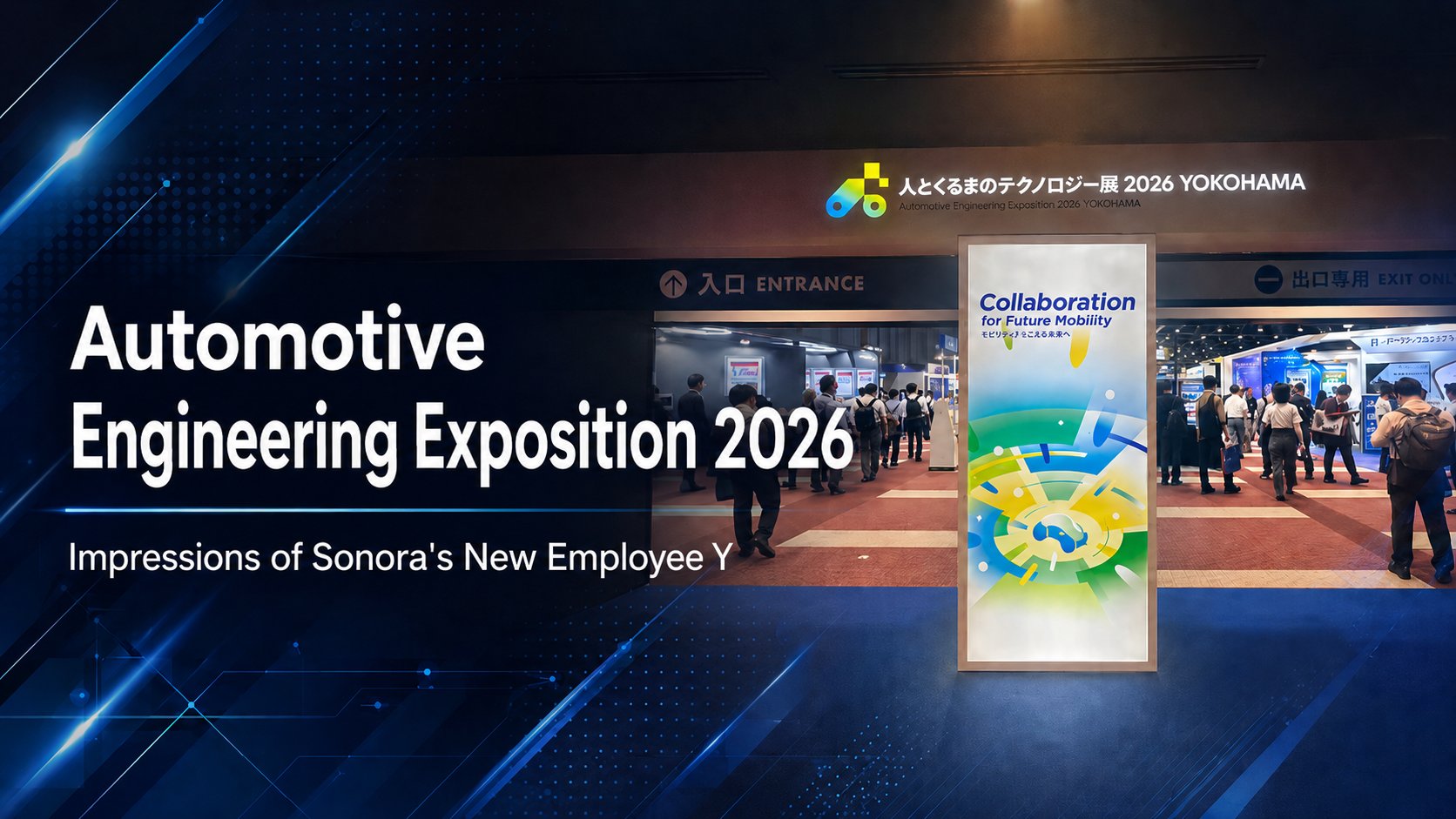
I am Y, a new employee at Sonora. (I joined the company two months ago.)
The other day, I attended the “Human and Vehicle Technology Expo 2026” held in Yokohama.
Since my work usually involves sound, I don’t yet have much specialized technical knowledge about cars themselves. (I’ll be learning more going forward.)
Even so, what struck me strongly at the exhibition was the sense that “sound” is going to become increasingly important in the automotive industry.
This year’s expo showcased cutting-edge technologies such as electrification, autonomous driving, AI, and software, and it made me feel that cars are evolving from being merely a means of transportation into safe and comfortable spaces.
What particularly caught my interest was the “sound”-related aspects, such as in-cabin noise and vibration, approaching vehicle warning sounds, and the acoustic environment inside the cabin.
As electric and hybrid vehicles become more common, the engine sounds of the past have grown quieter, and cabins have become more silent.
However, I learned that sounds that previously went unnoticed—motor noise, tire noise, wind noise, and small sounds from interior components—have, in turn, become more noticeable.
From the perspective of someone working in a sound-related field, how to evaluate and improve “sounds that become noticeable once things go quiet” is a fascinating theme.
I believe that going forward, even greater attention will be paid not just to making sounds quieter, but to how we create “sounds that people don’t find unpleasant” and “sounds that put people at ease.”
Comfort of the In-Cabin Space
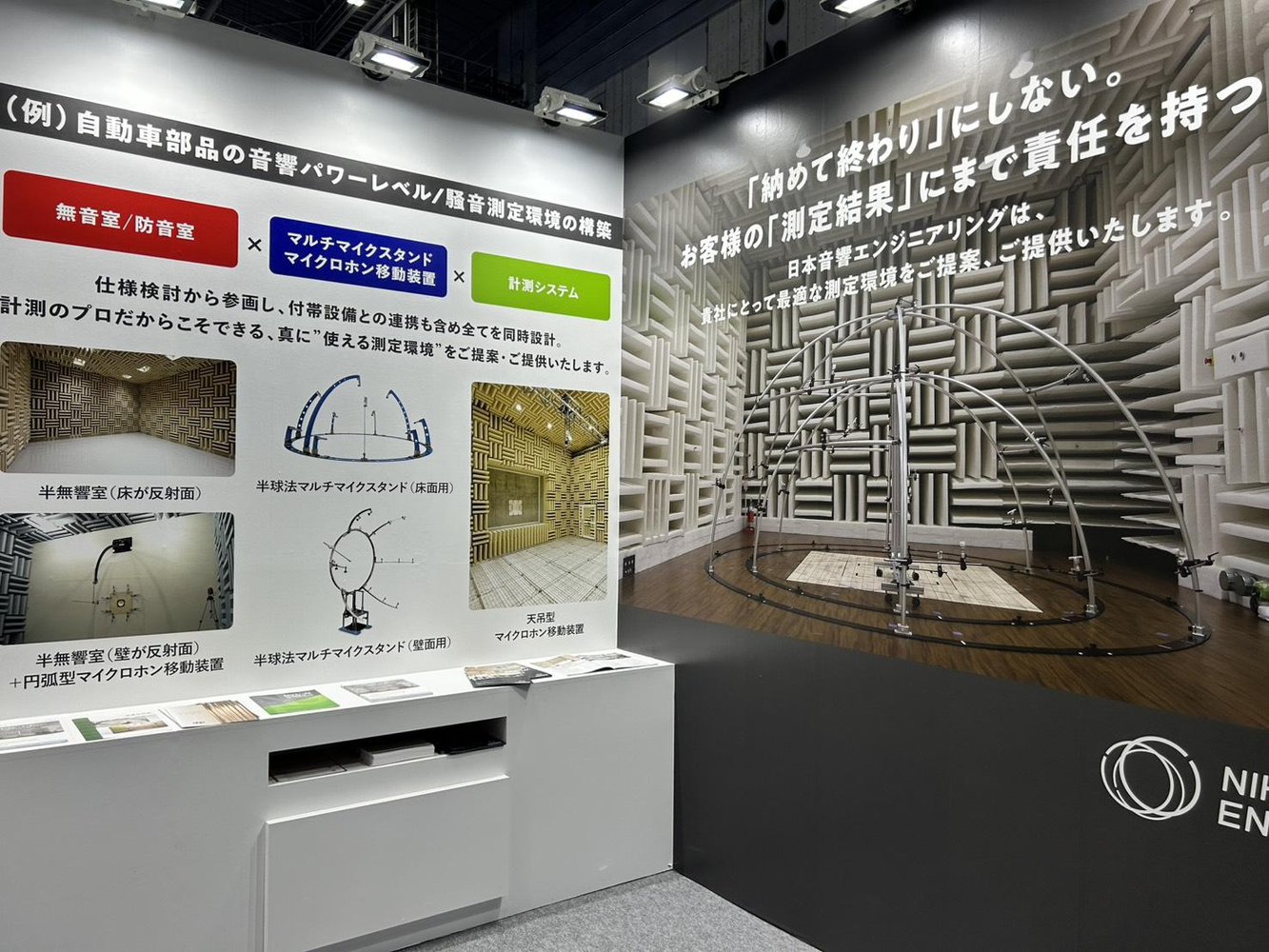
I observed a seminar on in-cabin acoustics hosted by Nihon Onkyo Engineering. The lecture, themed around in-cabin acoustic spaces in the age of autonomous driving, made me realize that cars of the future are being envisioned not merely as a means of transportation, but as “comfortable spaces for listening to music, watching videos, and relaxing.”
Until now, the image of in-cabin sound had been strongly associated with reducing noise to create quiet, but I learned that this alone is not enough.
As autonomous driving advances, the quality of the time spent inside the vehicle will become more important than before. I think that how sound is perceived inside the cabin, the naturalness of music and video audio, and the way external sounds blend with the vehicle’s own sounds will all greatly influence comfort.
To achieve all this, I once again felt the importance of properly measuring and evaluating in-cabin sound, and of verifying it in environments close to real-world conditions. In an actual cabin, many factors affect sound—speakers, interior materials, windows, seats, and the number and positions of occupants. For that reason, I came to feel that improving in-cabin acoustics requires considering the compatibility of sound across the entire cabin space.
Car Sickness
Personally… comfort is important, but I’m also hoping for car structures that prevent car sickness. Haha. (I personally get carsick easily.)
I believe that “pursuing comfort” and “overcoming car sickness” are indirectly related issues. Car sickness apparently occurs when the brain becomes confused by information received from the semicircular canals, the eyes, and the body. According to research found on a certain website, it’s said that 30–40% of elementary and junior high school students get carsick.
So, what can be done to prevent car sickness? According to one study, simply listening to a 100 Hz pure tone for one minute before getting in a car was found to improve motion sickness. If car sickness can be improved just by listening to a target sound, then it seems likely there are further measures that could improve it even more.
Currently, there are recommended cars that are less likely to cause car sickness, but no car has been built with car sickness prevention as its primary focus. (Although perhaps one already exists…) Comfort was a key consideration at this expo, but if comfort can be maximized to the limit by utilizing sound and vibration, the brain’s stress would naturally be relieved. I think there may be approaches to car sickness from both the sound and vibration sides as well. I’m hopeful that the evolution of the in-cabin space into something comfortable will, as a result, become a step toward eliminating car sickness!
Approaching Vehicle Warning Sounds
I also became interested in approaching vehicle warning sounds. Because electric vehicles are very quiet when traveling at low speeds, a sound is needed to alert pedestrians to the car’s approach. However, if that sound is too loud it becomes noise, and if it’s too quiet it poses a safety hazard.
Apparently, some manufacturers use wide-angle speakers or mix together around ten different frequencies to output the sound. Factors such as audibility, minimal unpleasantness, and how well the sound blends into the urban environment also need to be considered, and I came to feel that approaching vehicle warning sounds are thought through far more deeply than I had imagined.
It’s a casual sound we hear all the time—why not try lending it an ear?
Summary
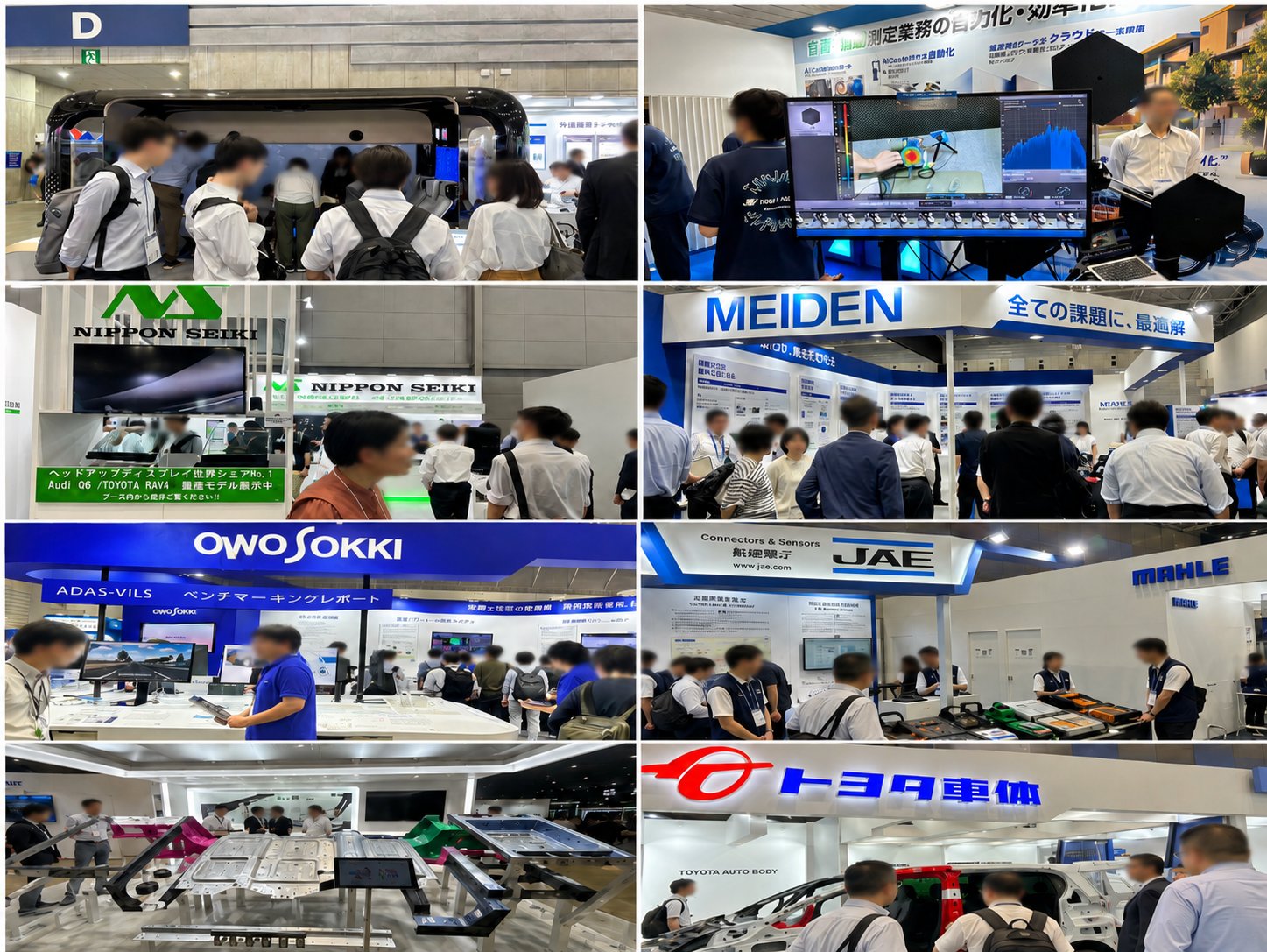
Through this expo, I came to feel that fields such as in-cabin noise, vibration, approaching vehicle warning sounds, and in-cabin acoustics still hold a great deal of potential. As cars become more autonomous and electrified—quieter and smarter—I think the importance of accurately measuring and evaluating sound, and of creating sound environments that are pleasant for people, will only continue to grow.
The “Human and Vehicle Technology Expo 2026” was a place to learn about the latest automotive technologies, and it also became a great opportunity to think about how the work I do every day can contribute to the future growth of the automotive industry. I still need to study more when it comes to specialized technology and knowledge, but viewed through the lens of sound, the future of cars felt very familiar, relevant, and fascinating to me.
Going forward, I’d like to keep an eye on how “sound”-related technology continues to evolve. ^^ And perhaps there’s room for new business development too—such as combining sound and vibration to prevent car sickness.
Sonora Technology, Y