
Choosing Not to PaintReconsidering – “Paint-Free Soundproof Rooms and Anechoic Rooms” Amid the Middle East Crisis –
05/28/2026
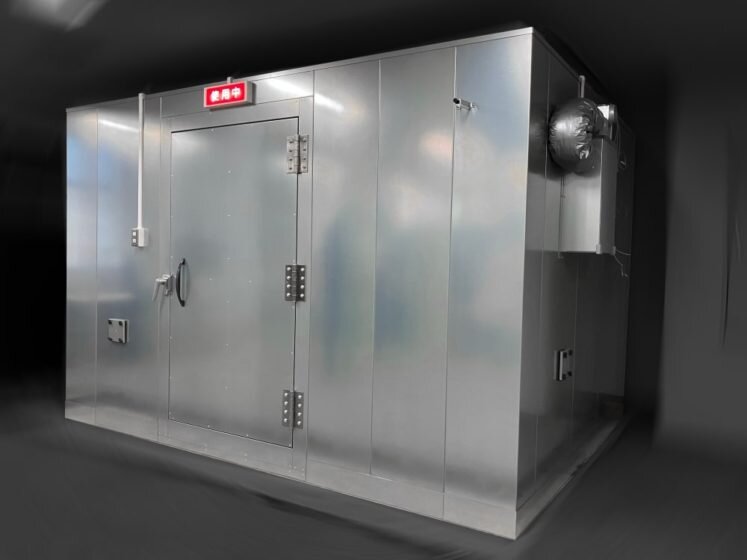
MFAC / MSAC
Painting Is No Longer Just One Finishing Process
From the outside, an anechoic room or soundproof room may look like nothing more than a plain white box or gray box. In most cases, however, that exterior appearance is created by paint.
Steel panels are treated with primer, intermediate coats, and top coats. The interior side is finished with paint that serves both aesthetic and anti-corrosion purposes, while the exterior side is coated to withstand the surrounding environment. These coating films have long supported both the appearance and durability of soundproof rooms.
However, since the beginning of 2026, the very act of “painting” has begun to become a factor that shakes the cost structure of soundproof rooms and anechoic rooms. Behind this shift are the worsening situation in the Middle East and the resulting uncertainty in the supply of petrochemical raw materials.
What Is Happening in 2026?
On February 28, 2026, military action against Iran by the United States and Israel triggered a situation in which passage through the Strait of Hormuz became significantly restricted.
According to materials published by Japan’s Agency for Natural Resources and Energy, Japan depends on the Middle East for more than 90% of its crude oil imports. What characterizes the current situation is that not only energy supply, but also the procurement network for petrochemical raw materials itself, has been destabilized.
Naphtha is a light petroleum product obtained by refining crude oil. It is a basic petrochemical feedstock used in products such as thinners, solvents, resins, adhesives, and thermal insulation materials.
According to materials from the Cabinet Secretariat, as of 2024, approximately 40% of Japan’s naphtha procurement came from the Middle East. In addition, the crude oil used as the raw material for domestically produced naphtha is also highly dependent on the Middle East. As a result, the entire naphtha supply chain is structurally vulnerable to developments in the Middle East.
This has had a direct impact on paint prices.
Price increase notices from major Japanese paint manufacturers have reached historically significant levels, based on official company announcements and major reports from the first half of 2026.
| Nippon Paint | Up to 75% increase for thinner products, applicable to orders placed from March 19, 2026 |
| Kansai Paint | Price revision of 50% or more for thinner products in general, applicable to shipments from April 13, 2026 |
| SK Kaken | 15–25% increase for water-based products, 20–30% for solvent-based products, and 10–15% for powder coatings, applicable to shipments from May 11, 2026; major solvent-based products from April 21 |
| Teikoku Databank survey | In a survey conducted from April 3 to 7, 2026, with 1,686 valid responses, 96.6% of companies responded that they were negatively affected by rising crude oil prices and supply concerns caused by the Middle East situation |
This is not an issue limited to a specific industry. It is a situation in which the basic assumptions of manufacturing itself are being shaken.
The Weight of Painting in Soundproof Rooms and Anechoic Rooms
It may come as a surprise to many people, but soundproof rooms and anechoic rooms are structures that use a significant amount of paint.
Painting is involved in many areas, including:
- Anti-corrosion coating for the steel panels that form the structure
- Interior and exterior finish coatings
- A large number of components and large surface areas, including walls, ceilings, floors, doors, and the rear surfaces of acoustic wedges
- Spray painting performed in the factory, as well as touch-up painting on site
- Painting booths, drying, masking, curing, and inspection processes, all of which consume considerable time and cost
In addition to the rising price of paint itself, the sharp increase in thinner costs, difficulty in obtaining diluents, and delivery delays have directly affected both factory production planning and project delivery schedules.
Painting is no longer merely the final finishing process. It is becoming one of the major factors affecting both cost and lead time.
One Possible Solution: Paint-Free Structures Using High-Corrosion-Resistant Steel Sheets
In response to this situation, one approach Sonora Technology has long proposed is a paint-free structure using high-corrosion-resistant steel sheets as the primary material.
High-corrosion-resistant steel sheets, represented by products such as ZAM® from Nippon Steel and KOBEMAG® from Kobe Steel, are hot-dip coated steel sheets with a zinc-6% aluminum-3% magnesium coating layer. Their corrosion resistance is secured at the coating stage itself, based on official materials from each manufacturer.
The main performance characteristics are as follows.
Corrosion Resistance
According to manufacturers’ salt spray test results, these materials offer corrosion resistance approximately 10 to 20 times higher than hot-dip galvanized steel sheets, and approximately 5 to 8 times higher than hot-dip zinc-5% aluminum alloy coated steel sheets.
Cut-Edge Protection
Even at cut edges, a zinc-based protective film containing aluminum and magnesium, dissolved from the coating layer, covers the cut surface and provides excellent corrosion resistance.
Formability
The coating layer is hard and smooth, offering strong performance in press forming and bending processes.
Electrical Conductivity
Because the plated surface contains aluminum, it offers good electrical conductivity and allows static electricity to dissipate easily. This can also be advantageous for installation in cleanrooms.
Workability and Construction Efficiency
In general areas, topcoat painting may be omitted in some cases, contributing to a reduction in painting processes.
In other words, because the steel sheet itself incorporates anti-corrosion performance, the painting process can be significantly reduced.
By reducing dependence on painting, the following benefits can be obtained:
- Reduced exposure to paint and thinner price increases
- Shorter lead times by eliminating painting processes
- Reduced VOC emissions, providing environmental advantages
- Structural reduction of aging-related risks such as coating peeling and chalking
Points to Note: “Zero Painting” Is Not a Universal Solution
To be fair, paint-free structures also have certain conditions and limitations.
Welded Areas
In areas where the coating layer is lost due to welding, repair treatment using Zn-Al-based paint or similar materials is required. This is officially recommended by both Nippon Steel and Kobe Steel.
Cut-Edge Treatment Depending on Processing Conditions
Depending on the processing method, such as laser cutting, cut-edge treatment may be recommended.
Material Cost
In general, the material unit price tends to be higher than that of ordinary hot-dip galvanized steel sheets. The actual cost difference depends on sheet thickness, coating weight, lot size, and the supply route.
Design Requirements
If there is a requirement to paint the room in a specific color or match a corporate color, painting is naturally required.
For this reason, Sonora Technology proposes the optimal solution for each project after confirming the design requirements, expected service life, installation environment, and cost allocation.
Possible approaches include:
- Fully paint-free structures
- Hybrid structures combining partial painting and paint-free materials
- Conventional painted finish structures
Especially in the current situation, where the delivery schedule and pricing of paints are difficult to predict, simply having a structural option that does not depend on painting can help reduce both delivery risk and cost risk.
Conclusion
The uncertainty in the supply of petrochemical raw materials triggered by the Middle East situation is having an unprecedented impact on the pricing and delivery schedules of paints and thinners.
For structures such as soundproof rooms and anechoic rooms, where the proportion of painted surfaces is high, this is an event that forces us to reconsider the assumptions behind design and procurement.
Should painting continue to be incorporated as a matter-of-course finishing process?
Or should we select a structure that does not depend on painting?
Sonora Technology will continue to work with customers to examine multiple approaches suited to the current market environment, including paint-free structures using high-corrosion-resistant steel sheets as the primary material.
Note: The market information and price revision information in this article are based on conditions as of May 2026. The latest information may differ depending on subsequent changes in the situation.