
Does “Perfect Silence” Exist in Outer Space?
02/15/2026
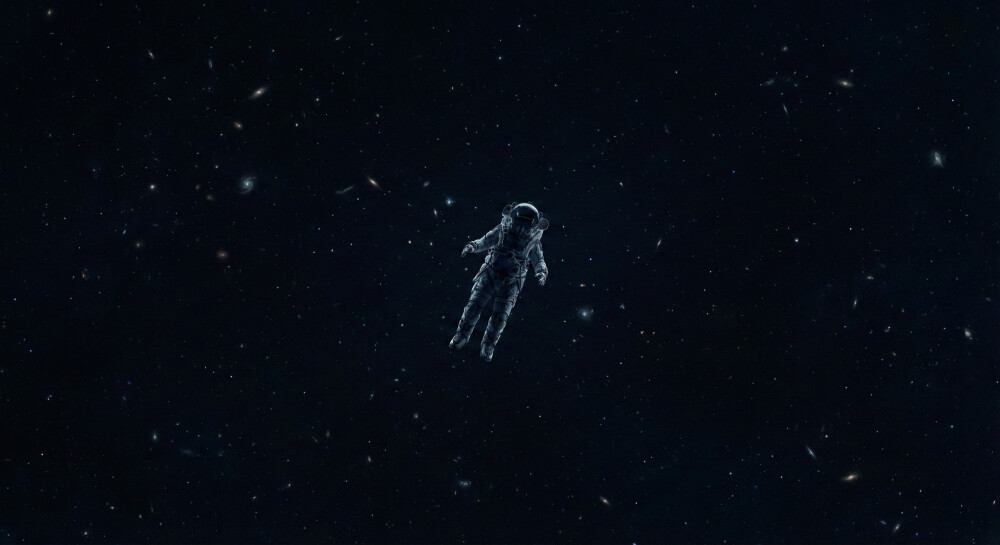
In conclusion:
Outer space contains environments that are almost silent for humans, but physically perfect silence does not exist.
In movies and anime, space is often depicted as a world of complete stillness—“shhh…”.
However, the real universe is far more complex than we imagine.
Why can “perfect silence” not exist?
Here, we examine this from two perspectives: matter and physical phenomena.
1. Space Is Not Completely Devoid of “Sound Carriers”
Sound is produced when vibrations travel through matter such as air or water.
On Earth, air molecules are densely packed, so voices and music are clearly heard.
In outer space:
- Atoms and molecules do exist
- Their density is extremely low
- The distance between molecules is far too great
As a result, vibrations cannot propagate continuously and cannot vibrate the human eardrum.
In other words,
sound does not “cease to exist”;
it simply does not propagate.
2. There Are Places in Space Where “Sound” Actually Exists
Most of space is nearly silent, but there are exceptions.
Sound exists in dense gas regions
In regions such as galaxy clusters and nebulae, where gas is relatively abundant, pressure waves—the physical nature of sound—are actually generated.
However, those sounds:
- Have extremely low frequencies
- Are far below the human audible range (approximately 20 Hz to 20 kHz)
Therefore, they cannot be heard by human ears.
For us, space is a world filled with “inaudible sound.”
3. “Perfect Silence” Does Not Exist Even in Quantum Physics
Even if we removed all gas, dust, and light, the space would still not become perfectly silent.
Quantum fluctuations
Modern physics holds that even in a vacuum, energy can never be exactly zero.
Tiny fluctuations—known as quantum fluctuations—constantly occur.
Particles briefly appear and disappear even in regions that should contain “nothing.”
From a microscopic perspective, the universe is
not a perfectly still space, but
a dynamic world of invisible motion.
4. Why Space Still Feels Silent to Humans
Why do astronauts say, “Space is silent”?
The reason is simple:
- No vibration strong enough reaches the eardrum
- Human sensory organs cannot respond
Therefore, subjectively, space feels completely silent.
During a spacewalk, what astronauts hear is:
- Their own breathing
- Mechanical sounds inside the spacesuit
- Their heartbeat
and nothing else.
5. Why Space Battles in Movies Have Sound
In Star Wars or Gundam, beam weapons and explosions produce dramatic sound even in space.
In reality:
- A beam weapon produces no sound in space
- Even an explosion produces light, but no shockwave propagates
Those sounds do not physically exist.
They are added purely for dramatic effect.
Why add sound?
Because:
- It increases impact
- It makes the situation easier to understand intuitively
For these reasons, sound is deliberately included.
Some works resolve this contradiction by explaining that
“artificial sounds are generated inside the cockpit based on sensor data.”
Aside: Real Space Combat Would Not Be a Dogfight
Here is a short shift in perspective.
If combat were to occur in space, close-range battles or dogfights like those in movies would be almost impossible.
Battles would be decided at extreme distances
Space has almost no obstacles, and sensors can detect targets hundreds or even thousands of kilometers away.
- Once detected, the distance is already lethal
- The outcome is decided before opponents approach
Combat would occur at extreme ranges without visual contact.
A “small hole” can be fatal in space
On Earth, large explosions and wide destruction matter most.
In space, the situation is completely different.
For a spacecraft, fatal damage includes:
- Hull penetration
- Loss of airtightness
- Damage to internal systems
Therefore,
even a single small hole in the hull can render a spacecraft inoperable.
Are “large missiles” really necessary?
Huge explosive missiles are not strictly required.
In space:
- There is no air resistance
- Relative velocities are extremely high
This means kinetic energy itself becomes a weapon.
In theory:
- Even an object the size of a marble
- At sufficient speed
can penetrate a spacecraft’s hull.
This is not about explosions, but purely a matter of collision energy.
In combat, simply making a hole in the opponent’s hull is enough—
like popping a balloon with a needle.
In reality, spacecraft can also suffer severe damage if they collide with debris at high speed.
Summary: Space Is Quiet, but Not Perfectly Silent
- A small amount of matter exists in space
- There are regions where sound waves are generated
- Energy fluctuations never stop at the microscopic level
Yet because we cannot hear any of it, space feels silent to us.
Space is not “absolute silence,” but rather “quietness beyond human perception.”
Seen this way, doesn’t space feel far deeper and more fascinating than a place that is simply silent?