
BFB Density (32K, 96K) – Which Should You Choose?
02/20/2026
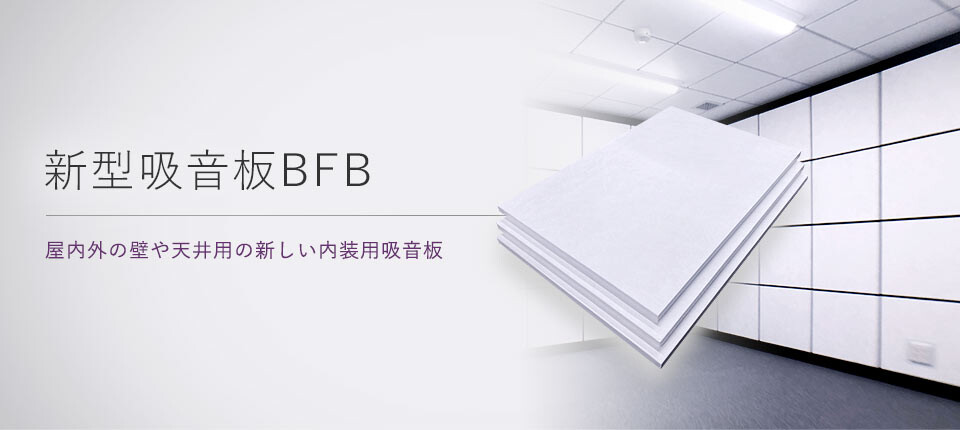
Sonora Technology’s new sound-absorbing panel, BFB
This product comes in two density types: 32K and 96K.
We receive many inquiries asking, “Which density should I choose?” Therefore, we have summarized the selection guidelines below.
1. What exactly is Density?
32K and 96K are numerical values indicating density, representing the weight per cubic meter.
Specifically:
| 32K | 32 kg/m³ |
| 96K | 96 kg/m³ |
This means that 96K is approximately three times the weight of 32K.
Since BFB’s main material is glass fiber (glass wool), the density expresses “how much glass fiber is included.”
2. How Does Density Affect the Product?
2-1: Price
As mentioned above, 96K uses approximately three times the amount of glass fiber as 32K, so the price is also higher.
| 32K Product List Price | 2,600 JPY/sheet (Orders possible from 20 sheets) |
| 96K Product List Price | 4,450 JPY/sheet (Orders possible from 20 sheets) |
2-2: Texture
Since 96K is heavier and harder than 32K, it has a firmer, more substantial texture.
Therefore, as an interior material, it is superior to 32K in terms of design and durability.
2-3: Selection Method Considering Price and Texture
For example, we recommend distinguishing usage as follows:
| Sites where people do not often see the interior soundproofing work, such as a machine room | Select 32K |
| Sites where people often see the interior, such as factories or offices | Select 96K |
3. Comparison of Acoustic Performance
The difference in density changes the frequency band at which sound absorption performance peaks.
The guidelines are as follows:
| 32K Product | Excels at absorbing sound in the high-frequency range |
| 96K Product | Excels at absorbing sound in the mid-frequency range |
For this reason, selecting 32K or 96K according to the “frequency band that needs particular absorption at the site” is also an effective method.